Gone are the days when blue-collar workers had to rely on traditional methods of finding work. With the advancement of technology, online applications have revolutionized the way blue collar workers apply for trade jobs, offering streamlined blue collar application processes tailored to their specific needs. Applying for a job online can be an efficient and effective way to get your foot in the door, but there are certain dos and don’ts that you should keep in mind. Understanding who are blue collar workers and the unique challenges they face in job hunting is vital to helping them learn how to apply for blue collar jobs successfully, ensuring they can navigate online applications and interviews with confidence.
This blog will discuss the do’s and don’ts of online job application interviews for blue-collar workers.
Key Takeaways
- For those exploring what is a blue collar worker, understanding the job requirements thoroughly to ensure your skills and experience align with what employers are seeking for positions like mechanical fitters, showcasing your qualifications effectively.
- Optimize your resume for online applications, utilizing keywords and clear formatting to stand out to Applicant Tracking Systems (ATS) and hiring managers, highlighting relevant skills and experiences.
- Craft a compelling cover letter that narrates your qualifications and enthusiasm for the role, making sure it’s well-structured, error-free, and professionally toned.
- Maintain a professional online presence, especially on platforms like LinkedIn, to extend your career narrative and network within the industry, ensuring your digital persona is polished and up-to-date.
- Follow application instructions meticulously, demonstrating your attention to detail and commitment to the process, while avoiding hasty applications that lack customization and personalization for the specific role.
Blue-Collar Application Trends: What’s New?
Online recruitment for blue-collar roles has become highly competitive in 2025. Here’s what’s changed:
- Mobile-First Applications: Over 70% of blue-collar job seekers now submit applications via smartphone, using dedicated job apps or platforms provided by the top recruitment agency in Sydney.
- AI Resume Screening: Leading construction recruiters Eastern Australia employ AI-powered tools to screen applications for mechanical fitter and welder jobs NSW—meaning keyword optimization is vital.
- Digital Credentials: Employers expect digital copies of licenses and certificates, which can be uploaded during application—a requirement especially noted for roles in skilled tradespeople recruitment Australia.
- Video Interviews: Many firms, including the best recruitment company in Australia, now conduct initial video interviews or skill demonstrations as the first screening step.
- Increased Competition: More candidates are applying for fewer roles, raising the bar for resume personalization and professional online presence.
These changes mean blue-collar applicants need to be tech-savvy, highly detailed, and proactive when applying for top roles.
Defining Blue-Collar Workers
Blue-collar workers are individuals employed in manual labor jobs, typically in non-office environments such as factories, construction sites, warehouses, and transportation hubs. These jobs often require physical work and hands-on skills, ranging from operating heavy machinery to assembling products, repairing equipment, or maintaining infrastructure.
Characteristics of Blue-Collar Work
Hands-on and Practical Work
Blue-collar jobs emphasize practical, task-oriented work that requires physical effort, technical skills, or mechanical expertise. Workers in these roles often use specialized tools, operate machinery, or perform maintenance tasks essential to industries like manufacturing, construction, and logistics.
Varied Skill Levels
- Unskilled Jobs – Require little to no prior training, such as general laborers, warehouse workers, or cleaners. These roles may offer on-the-job training.
- Semi-Skilled Jobs – Require some technical knowledge or certifications, such as forklift operators, welders, or truck drivers with a commercial license.
- Skilled Jobs – Demand extensive training, certification, or apprenticeships, such as electricians, plumbers, carpenters, or CNC machine operators.
Physical Demand and Work Environment
Many blue-collar roles involve physical exertion, including lifting, operating heavy machinery, or working in outdoor or industrial environments. Unlike white-collar jobs, which are primarily office-based, blue-collar workers often operate in dynamic settings that require them to adhere to safety protocols and use protective gear.
Education and Training
While formal education requirements vary, many blue-collar jobs prioritize vocational training, apprenticeships, or industry-specific certifications over traditional college degrees. Trade schools, technical programs, and certifications (e.g., OSHA safety certification, welding certification, or a commercial driver’s license) can significantly enhance employability in these fields.
The Do’s
Do: Understand the Job Requirements
Grasping the full scope of a job description is crucial—it can be a decisive factor in your job application success. It’s essential to meticulously read and interpret the requirements, especially for blue-collar roles.
Take, for instance, if you’re eyeing a position as a mechanical fitter. In such a case, being well-versed with specific qualifications like a Certificate III in Engineering (Mechanical Trade) becomes imperative. Moreover, practical experience in related industries such as manufacturing, construction, or transport becomes almost a prerequisite.
But it doesn’t end there. Aligning your skills and experiences with the job’s requirements is a step further in demonstrating your suitability. This approach isn’t limited to technical roles like mechanical fitting; it’s a universal strategy applicable across all blue collar job applications. Remember, job descriptions often encompass a range of elements, including technical skills, soft skills, cultural fit, and specific responsibilities.
Do: Optimize Your Resume for Online Applications
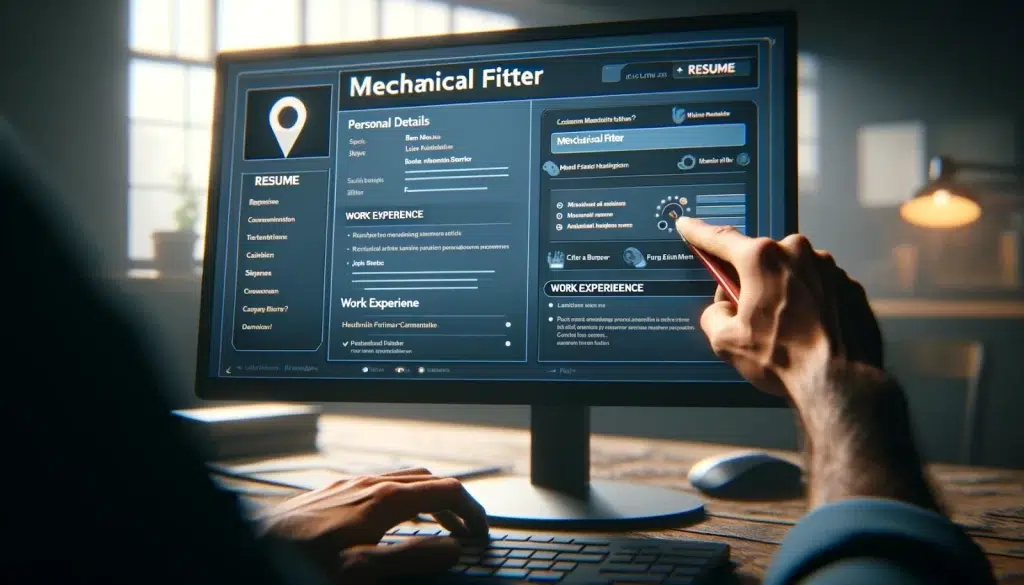
Optimizing your resume for an online application is a crucial step in securing a job. For a successful blue collar application, focus on tailoring your resume to highlight relevant skills and experiences specific to your trade.
1. Stand Out with Clarity and Format
Think of your resume as a personal brochure highlighting your professional achievements. Keep the format clean and easy to read. Use bullet points to break up text and bold headings to guide the reader’s eye. For creating an eye-catching resume, you can use free tools such as Canva, which offers you hundreds of free templates to choose from
2. Speak Their Language with Keywords
Applicant Tracking Systems (ATS) are the gatekeepers in the online job application world. These systems scan your resume for specific keywords related to the job. To make it past these digital sentinels, sprinkle your resume with relevant keywords and phrases from the job description. This strategy is not about stuffing your documents with buzzwords but weaving them into your experiences and skills.
3. Showcase Relevant Skills and Experiences
Customize your resume for each specific job by emphasizing the skills and experiences that match the requirements for many blue-collar-related jobs. This will demonstrate to employers your genuine interest in the particular role rather than a general job search. For instance, if you are applying for stone industry jobs in Australia, highlighting your experience with specific machinery and tools used in the stone industry will be advantageous.
If you were one of the job seekers taking the part of the role of a CNC Stone Machine Operator, it would be a plus point if you specifically mention skills that are highly conducive to the task, such as knowledge of operating Computer Numerical Control (CNC) bridge saws and other related machines.
For blue collar workers, it’s crucial to tailor your resume to showcase blue-collar skills for resume optimization, highlighting skills directly relevant to the job at hand and differentiating yourself from job descriptions specific to white-collar workers.
Real Advice from Australia’s Leading Blue-Collar Agencies
Top recruitment agency leaders stress the following for 2025 blue-collar job applications:
- Double down on digital documentation: Always upload copies of licenses/trade certificates.
- Highlight sector experience: For example, list specific stone industry or mechanical fitting skills for targeted job markets in Australia.
- Show tech comfort: Indicate familiarity with mobile application forms and video interview platforms.
- Be proactive: Agencies recommend following up within 5–7 days and maintaining contacts at Australia’s #1 trades recruitment agency for the latest opportunities.
Resume Formatting and Structure for Blue-Collar Jobs
When crafting a blue-collar resume, choosing the right format ensures your skills and experience are clearly presented to employers. There are two main types of resumes:
Chronological vs. Functional Resumes
- Chronological Resume – Best for those with a strong work history in the same industry. Lists jobs in reverse order, showing career progression.
- Functional Resume – Ideal for those with career gaps, frequent job changes, or switching industries. Focuses on skills rather than work history.
Essential Resume Sections
- Contact Information – Name, phone, email, and location (city/state).
- Resume Summary – A short paragraph summarizing your experience, skills, and value to employers.
- Skills Section – A list of hard and soft skills relevant to the job.
- Work Experience – Include job titles, company names, dates, and bullet points highlighting achievements.
- Education & Certifications – List any degrees, training, or licenses relevant to the role.
Optimizing Bullet Points
- Use strong action verbs (e.g., “Operated,” “Installed,” “Repaired”).
- Quantify achievements (e.g., “Reduced machine downtime by 20%”).
- Keep them concise (1-2 lines each).
Do: Prepare a Strong Cover Letter
Crafting a strong cover letter is like writing a personal invitation to your potential employer, inviting them to delve deeper into your professional world. It’s your chance to make a great first impression, even before the interview.
1. Crafting a Narrative that Resonates
Your cover letter should also complement the blue collar skills for resume you’ve highlighted. Start with a hook – an opening line that grabs attention. Then, weave a story that showcases your qualifications, passion, and personality.
2. Showcasing Fit and Understanding
Demonstrate that you’ve done your homework. Show an understanding of what the company does and how your skills and experiences make you an ideal candidate for this role. Use examples to illustrate how you’ve successfully applied your skills in the past and how you can bring similar results to their team.
3. A Reflection of Your Professionalism
Your cover letter reflects your professionalism beyond its content. Ensure it is well-structured, error-free, and maintains a professional tone. Address it to the appropriate person and end with a strong closing that reiterates your enthusiasm for the role.
Do: Maintain Professional Presence Online

Image Source: LinkedIn
Maintaining a robust and professional online presence is pivotal in the digital age, acting as an extension of your career and personal brand. Ensure your CV reflects your online presence and professional achievements. This task entails more than just purging social media of unprofessional content; it requires a proactive approach to shaping your digital persona.
Utilize platforms like LinkedIn to chronicle your career path. Leveraging LinkedIn’s “Open to work” frame feature is a strategic way to show that you are actively seeking employment.
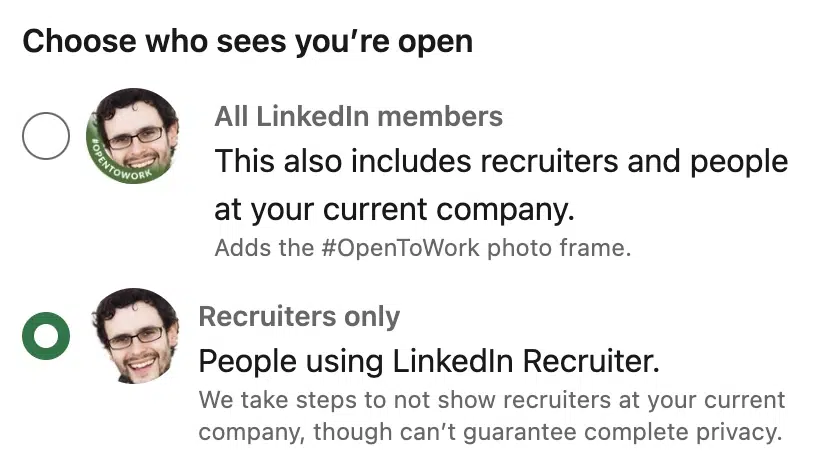
Image Source: TheJobInsiders
Keeping your LinkedIn profile updated with current skills, experiences, and notable achievements is imperative. Regular engagement with industry-relevant content and discussions aids in cultivating a credible and professional network. This consistency in maintaining a professional image across various digital mediums, from LinkedIn to personal blogs, is integral.
Do: Follow Application Instructions Carefully
Meticulously following instructions is a vital and often underrated step, reflecting your attention to detail. It’s essential to provide every requested item, whether a resume, cover letter or specific answers, as each piece is integral to presenting a complete profile.
Additionally, fully complete all sections of application forms, even with a simple “N/A” when necessary, to avoid giving the impression of carelessness or lack of interest. This thorough approach underscores your professionalism and commitment to the application process.
The Don’ts
Don’t: Apply Hastily
Avoiding hasty applications is akin to tailoring your suit for a special occasion – it must fit perfectly to make the right impression. When you apply for jobs en masse, without customization, it’s like sending the same generic invitation to different parties. Employers can easily spot a one-size-fits-all application.
Show mastery in a field in every job application you submit. Let’s say you’re applying for service coordinator or spare parts interpreter positions. Emphasize how your related experience has honed your practical skills and understanding of the environment. Delve into the specifics of your experience with different spare parts, detailing how this knowledge makes you an ideal fit for a role like a spare parts interpreter.
Such a focused and detailed presentation of your skills will capture the attention of potential employers. This illustrates that you’re not just another applicant but a professional with targeted expertise and a deep understanding of the industry.
Don’t: Ignore the Importance of Soft Skills

Blue-collar workers in Australia applying online should recognize the importance of soft skills. They are akin to giving your application a winning edge. In today’s job market, employers are not just looking for technical proficiency but also value soft skills that contribute to a productive and positive workplace.
Highlight Communication Skills
Effective communication is a universal need in the workplace. In your application, illustrate examples from your previous roles where your communication, both verbal and written, played a key role. This could be through resolving workplace disputes, providing clear instructions, or successfully liaising between different teams.
Showcase Teamwork Abilities
Being a team player is vital in blue collar jobs. Provide specific instances where you worked collaboratively, supported team objectives, or helped maintain a positive work atmosphere. This could include participating in team projects, supporting colleagues in challenging tasks, or contributing to a team-oriented solution.
Illustrate Problem-Solving Skills
Your capacity to identify problems and devise practical solutions is highly valuable. Provide concrete examples of challenges you’ve confronted and solved, perhaps in a high-pressure situation or when working with limited resources.
By emphasizing these soft skills in your online job application, you demonstrate to potential employers in Australia what you can do and how you can add value to their team and overall workplace culture. These skills are crucial for success in blue-collar roles, where teamwork, communication, and problem-solving are often daily requirements.
Don’t: Submit Without Proofreading
Proofreading your application before submission is like giving your work a final polish before presenting it. It’s crucial because errors, no matter how small, can cast doubt on your professionalism and attention to detail.
1. Attention to Detail
Your application is a reflection of your professionalism. Typos and grammatical errors can suggest carelessness. Thoroughly check your resume, cover letter, and any additional materials for errors. This attention to detail shows your dedication and respect for the application process.
2. Getting a Second Opinion
Sometimes, a fresh pair of eyes can catch mistakes you’ve overlooked. If possible, have someone else review your application. They can offer valuable feedback and help ensure your application is error-free.
Don’t: Use an Unprofessional Email Address
Selecting a professional email address for job applications is essential, as it’s often the first detail an employer notices and sets the initial tone of your professional image. A suitable email address should include your name and avoid nicknames or non-serious elements, reflecting your earnestness towards the job.
Simplicity is also important; opt for an easy-to-remember format like [firstname].[lastname]@[emailprovider].com to avoid confusion and typos, ensuring a straightforward and professional first impression.
Don’t: Forget to Follow Up

Image Source: Entrepreneur
Following up after submitting your job application is an integral step. It’s not just about reminding the employer of your application; it’s about demonstrating your continued interest and enthusiasm for the role.
1. Frequency of Doing a Follow-Up
Timing your follow-up is key. Wait about a week or two after submitting your application before reaching out. This gives the employer enough time to process your application but also keeps you fresh in their mind.
2. The Balanced Approach
Your follow-up should be courteous and professional. A simple email or a brief phone call inquiring about the status of your application can suffice. It’s important to express your continued interest in the position and politely ask if any further information is needed from your side.
3. Making a Response
When the job you are applying for receives your application, keep your reply polite and concise, whether through email or a phone call. Reiterate your interest in the position and inquire about the status of your application respectfully. This not only shows your enthusiasm but also your professionalism.
How Blue-Collar Workers in Australia Apply for Jobs in 2025

With trade jobs in Australia rapidly moving online, mobile-friendly and agency-driven channels now dominate the application space, especially among those seeking stonemason job opportunities in Sydney or joinery and cabinet maker recruitment.
Current Stone Fabricator Opportunities in Australia
These job openings highlight targeted trade roles that are better promoted through specialist recruiters, supplier networks, and stone industry job boards rather than broad hiring platforms like Seek.
Stonemason Fabricator – Rouse Hill, Sydney, NSW
This role is highly relevant because the article highlights Sydney-based stone fabrication roles as strong examples of opportunities that need niche trade sourcing. It suits the topic because Rouse Hill fabricator roles require hands-on stone experience, modern machinery exposure, and targeted candidate matching rather than generic job board traffic.
Stonemason Fabricator – Dubbo, NSW
This NSW role directly connects with the article’s focus on finding qualified stonemason fabricators through specialist channels. It is a strong fit because the position involves premium stone benchtop fabrication for residential and commercial projects, making it ideal for employers seeking candidates with proven workshop skills.
Stone Fabricator – Meadowbrook, Brisbane, QLD
This Brisbane role matches the topic because it targets skilled fabricators for premium residential and commercial stone benchtop work. It reinforces the article’s message that specialist recruitment is useful when employers need experienced tradespeople who understand fabrication, finishing, and workshop production.
Stonemason Installer / Fabricator – Old Reynella, Adelaide, SA
This Adelaide opening is relevant because it combines fabrication and installation skills, which are central to the article’s discussion of qualified stone benchtop fabricators. It also supports the point that employers should use more targeted recruitment channels when looking for candidates with trade experience, plan-reading ability, and site-ready skills.
Are you a stone industry professsional looking for vacancies?
Conclusion
For blue collar job seekers, mastering the online application process requires technical know-how, meticulous attention to detail, and a professional approach. Adhering to these guidelines will boost your confidence and enhance your likelihood of job success.
If you’re an employer seeking to strengthen your team with qualified professionals or a blue-collar worker looking to upgrade your skills, Dayjob Recruitment is your go-to resource. We specialize in bridging the gap between skilled talent and industry needs, ensuring that each connection we make aligns certified expertise with specific job demands.
Interested in how we can support your role as an employer? Click below to learn more.
FAQs
What does the term ‘blue-collar’ mean in the context of job classifications in Western Australia?
To understand what is blue collar job, it refers to positions involving manual labor or skilled trades that are essential to industries like construction, manufacturing, and maintenance.
Can I apply for blue collar jobs using mobile devices, and are there any tips for doing so effectively?
Yes, many job application platforms are mobile-friendly. Ensure you have access to all necessary documents on your device, and use apps or tools that facilitate resume and cover letter formatting on mobile.
How important is networking for finding many blue collar jobs, and how can I network effectively?
Networking can be very beneficial. Attend industry-related events, join online forums, and connect with professionals on platforms like LinkedIn. Engaging in discussions and sharing your interests can open up job opportunities.
Are blue collar jobs in Western Australia usually paid hourly, especially at the entry-level?
Yes, many blue collar jobs in Western Australia, particularly at the entry level, are paid hourly. This is common in construction, manufacturing, and services requiring manual labour or technical skills.
How do you handle applying for jobs with an online application process?
To effectively handle online job applications, consider these steps:
- Customize your resume with job-specific keywords.
- Use a professional email address.
- Keep track of all applications submitted.
- Showcase your best work in a portfolio.
- Follow application instructions carefully.
- Prepare the necessary information beforehand.
- Follow up about a week after applying to show continued interest.
This concise approach can enhance your application and improve your chances of getting noticed.
What should you not do when applying for a job?
When applying for a job, you should avoid:
- Submitting a generic, uncustomized application.
- Overlooking the importance of soft skills.
- Failing to proofread for errors.
- Using an unprofessional email address.
- Neglecting to follow up after submitting your application.
These actions can diminish the effectiveness of your application and potentially deter employers from considering you for the position.
How do you stand out in an online application?
To stand out in an online application, it’s essential to tailor your resume and cover letter to the job description, incorporate relevant keywords, and follow up appropriately to express your continued interest in the position.
What does autofill with resume mean?
“Autofill with resume” means when an online application system automatically fills in parts of the application form with information extracted from your resume. This feature aims to save time and ensure consistency across your application documents.
How to get a blue collar job?
Do: Tailor your letter to the specific job and company, clearly highlighting how your skills and experiences make you a great fit. Keep it concise, professional, and proofread to avoid any typos or grammatical errors.
Don’t: Avoid generic, templated letters that don’t address the specific position. Don’t include irrelevant personal information or negative comments about previous employers.