The stone industry offers several related but distinct career paths, with stonemason, fabricator, and installer roles each emphasizing different mixes of trade skill, workshop work, and site-based responsibility. In practice, these roles often overlap, and many employers advertise hybrid positions that combine fabrication, saw work, installation, or general stonemasonry rather than keeping each function completely separate. Pay can vary significantly by employer, city, and specialisation.
Current SEEK salary data places stonemason roles around A$75,000 to A$85,000 on average, while fabricator and installer pay often overlaps depending on machine capability, site work, and experience. Some current ads for mixed fabrication and installation roles show hourly rates around $38–$45 per hour, while other workshop-heavy stone roles advertise “competitive” or above-average pay without a published salary.
Key Takeaways
- Stonemasons often earn strong trade salaries in Australia, with SEEK showing an average range of about A$75,000 to A$85,000.
- Fabricator and installer pay can overlap and, in some cases, reach similar advertised levels depending on the role and employer.
- Fabricators are usually more workshop-based, installers are usually more site-based, and stonemasons may work across both depending on the type of stone work involved.
- Stonemasonry commonly follows a formal apprenticeship pathway, while fabrication and installation roles are often built through workshop training, machine experience, or employer-led development.
- Your best option depends on whether you prefer traditional trade craftsmanship, workshop production, or site-based installation work. This is an inference based on occupation definitions and current hiring patterns.
Core Differences Between Stone Industry Roles

A stonemason works with natural or manufactured stone to build, shape, repair, or restore structures and stone features. Jobs and Skills Australia describes stonemasons as workers who cut and shape hard and soft stone blocks and masonry slabs to construct and renovate stone structures and monumental masonry.
A fabricator usually works in a workshop or factory environment, processing stone into finished components such as benchtops, panels, or cut pieces. Current job ads often combine fabrication with CNC operation, saw work, or finishing tasks, which shows that the role is strongly tied to machinery, workflow, and production quality.
An installer is usually focused on transport, fitting, measuring, adjustment, and final placement at residential or commercial sites. Installer roles often sit closest to the customer-facing end of the process, especially in benchtops, fit-outs, and renovation work.
Quick Comparison Table
| Aspect | Stonemason | Fabricator | Installer |
| Main focus | Stone shaping, construction, restoration, detailed trade work | Cutting, machining, finishing, workshop production | Fitting, carrying, measuring, installing, final adjustments |
| Typical work setting | Workshop and/or site | Mostly workshop | Mostly site |
| Entry pathway | Commonly through apprenticeship and Certificate III | Often through workshop, machinery, or CNC-based training | Often through employer-led site training and team experience |
| Pay picture | SEEK guide shows around A$75,000–A$85,000 on average | Public ads vary widely by machinery and workshop duties | Public ads vary widely by site work, region, and experience |
| Progression path | Specialist contractor, heritage work, business ownership | CNC specialist, workshop lead, production supervisor | Lead installer, site supervisor, independent contractor |
This table is a practical summary based on official occupation data, the Stonemasonry training pathway, and current job-ad patterns rather than a rigid national rulebook.
Stonemason Career Path
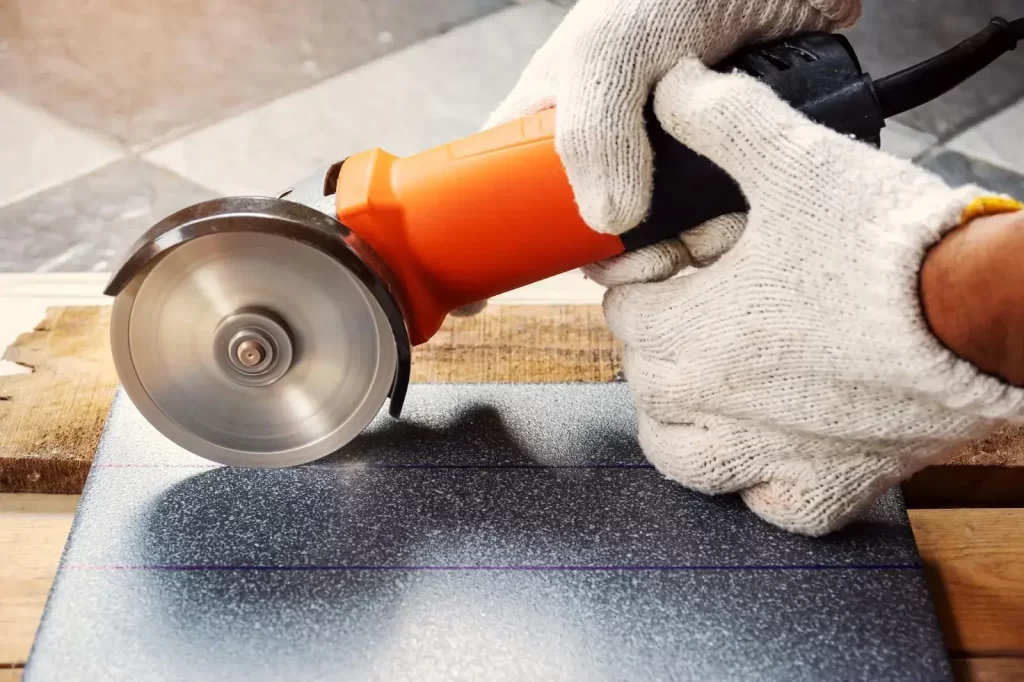
Stonemasonry is the most trade-defined of the three pathways. The Certificate III in Stonemasonry (CPC32320) is designed for stonemasons working with sandstone, limestone, marble, and other stone products, including monuments, heritage and new buildings, and building components such as walls, floors, and arches.
This path usually suits people who want a more traditional trade identity and are interested in stone shaping, structural work, monuments, restoration, or detailed construction applications. It can also offer a clearer long-term route into specialist contracting, heritage work, or small business ownership. That last point is an inference from the qualification scope and the broader stonemason occupation profile.
Stonemasonry can be a strong fit if you are drawn to:
- long-term specialist trade progression
- traditional trade craftsmanship
- detailed stone shaping and finishing
- heritage or restoration work
- mixed workshop and site-based projects
Fabricator Career Path

Fabricators usually work closer to the production side of the stone industry. They are more likely to use saws, polishers, CNC equipment, measuring systems, and workshop processes to turn raw slabs or blocks into finished products. Current stone-industry job ads frequently bundle fabrication with CNC operation, factory work, saw work, or even some installation, which reflects how workshop roles are structured in practice.
This role suits people who like controlled environments, machinery, and repeatable production workflows. It can also be a good option for those who are more interested in technical execution than in the site-facing parts of the trade.
Fabrication can be a good fit if you prefer:
- progression into CNC-heavy or supervisory roles
- workshop-based work
- machinery and production systems
- measurement and cutting accuracy
- repeatable processes and quality control
Installer Career Path

Installers usually sit at the delivery and fit-off end of the process. Their work often involves site measurements, carrying and placing finished stone, making adjustments, checking fit, and completing the final presentation of the product at a home or commercial site. Current SEEK ads for stone benchtop and related installation roles reinforce how site-based and practical this work can be.
Installer roles appear frequently in current job listings, which suggests strong demand from benchtop, renovation, and fit-out work. That does not prove installers are the “fastest-growing” segment, but it does support the view that installation is a major hiring stream in the current market.
Installation can suit people who enjoy:
- customer-facing project completion
- active site work
- variety of locations
- practical fitting and adjustment
- team-based field work
Salary Comparison
The most reliable public salary figure in this niche is for stonemasons, with SEEK showing an average annual salary of about A$75,000 to A$85,000 nationally, and similar ranges in Sydney, Melbourne, Adelaide, and Perth. In some regions, listed averages are higher.
For fabricators and installers, public ads show that pay varies more by employer and job design. A current Queensland listing advertises Installer, Stone Mason & Fabricator roles at $38–$45/hour + OT, while Adelaide listings include Stone Installer and Stone Benchtop Fabricator & Installer roles, though not all publish salary bands.
The safest conclusion is this: stonemasonry has a strong documented salary benchmark, while fabricator and installer pay often overlaps depending on whether the role includes CNC work, workshop responsibility, site complexity, or hybrid duties.
Training and Entry Requirements
Stonemasonry most commonly follows a formal apprenticeship route in Australia. The CPC32320 Certificate III in Stonemasonry is the core qualification and is designed for stonemasons working across multiple stone materials and applications.
Fabricator roles often favour people with workshop experience, machine familiarity, or CNC-related exposure. Installer roles are commonly built through hands-on site experience, supervised team work, and employer-led training. This varies by business, but current job ads repeatedly show combined workshop and site roles that are learned through practical experience as much as formal study.
A good summary is:
- Stonemason: most formal trade pathway
- Fabricator: most workshop and machine-focused pathway
- Installer: most site-led, practical entry pathway
Career Progression
Stonemasonry can lead into specialist contracting, heritage restoration, monuments, teaching, or small business ownership. That pathway is helped by the clearer trade identity and qualification structure.
Fabricators often progress into CNC specialisation, production leadership, quality control, or workshop supervision. Because many fabrication roles are tied to machinery and workflow, technical depth can become a strong advantage over time. This is an inference grounded in the kinds of mixed fabrication/CNC roles currently advertised.
Installers can move into lead installer roles, site coordination, project management, or independent contracting. In smaller stone businesses, experienced installers often become the people who manage crews, client expectations, and final site outcomes. This is an inference based on the structure of current installer and hybrid role ads.
Job Market and Demand
The Australian market continues to show demand for stonemasons and related stone-sector workers. Jobs and Skills Australia lists 4,800 employed stonemasons, and official vacancy reporting has noted that Bricklayers and Stonemasons have faced ongoing skill shortages for many years.
Current SEEK searches also show active hiring for stone roles across Australia, including general stone jobs, fabrication roles, installer roles, benchtop roles, and hybrid positions. That supports the idea that the stone sector still offers viable entry and progression opportunities, especially for workers willing to build a broader skill set.
Current Stone Industry Opportunities in Australia

The Australian stone industry currently offers numerous employment opportunities across all three career paths, with companies actively seeking skilled professionals. Dayjob Recruitment specializes in connecting qualified candidates with leading stone industry employers throughout Australia.
These current openings demonstrate the diverse opportunities available and the different skill requirements for each role type.
Stonemason / Installer / Fabricator (All-rounder)
This versatile position combines all three skill sets, offering comprehensive experience across the entire stone industry process. The role provides excellent career development opportunities and competitive compensation for multi-skilled professionals.
Stonemason Leading Hand
This role involves leading and supervising a stonemason team, fabricating and installing benchtops, and cutting, shaping, polishing, measuring, glueing, and manufacturing custom stone products. It also includes collaborating with clients, contractors, and team members while maintaining safe and compliant site practices.
Stone Fabricator
This fabrication role emphasizes precision machinery operation and quality control in a modern workshop environment. The position provides stable work conditions and technical skill development opportunities.
Stonemason Installer / Fabricator
This role involves fabricating stone benchtops using primarily natural stone, porcelain, and engineered stone, including cutting, shaping, polishing, laminating, and glueing. It also includes installing benchtops on premium residential projects, measuring, handling, and packing stone slabs for delivery, and following OH&S procedures.
Are you a stone industry professsional looking for vacancies?
How to Choose the Right Path
- Choose stonemason if you want the strongest trade identity, a formal qualification path, and long-term options in specialist or traditional stone work.
- Choose fabricator if you prefer workshop production, machinery, and technical process work.
- Choose installer if you enjoy site work, practical fitting, movement between jobs, and visible end-of-project results.
- Choose a hybrid role if you want the broadest exposure. Many employers clearly value workers who can help across fabrication, saw work, and installation rather than only one narrow function.
Final Thoughts
Stonemason, fabricator, and installer are all strong career paths in the stone industry, but each suits a different type of worker. Stonemasonry offers the clearest trade identity, fabrication suits workshop and machine-focused workers, and installation is ideal for those who prefer active site-based work.
The right choice depends on your skills, work preferences, and long-term goals. Dayjob Recruitment helps connect job seekers with stone industry employers across Australia, making it easier to find roles that match your experience in stonemasonry, fabrication, or installation.
Do you work in the stone industry and are open to new opportunities? We run a WhatsApp Channel where we share specifically Stone Industry job openings across Australia — including roles for CNC operators, fabricators, and installers.
FAQs
Do I need a driver’s licence for stone industry jobs?
Often yes, especially for installer roles that travel between sites. Fabrication-only roles may place less emphasis on driving, but site-based work usually values licence availability. This is an inference based on the nature of installer and field roles shown in current job ads.
Do I need a formal qualification?
For stonemasonry, a formal apprenticeship pathway is the most established route, usually through Certificate III in Stonemasonry. Fabricator and installer roles are more often built through practical experience, workshop exposure, and employer-led training.
Which role pays the most?
The clearest public benchmark is for stonemasons, with SEEK showing around A$75,000 to A$85,000 on average. But fabricator and installer roles can overlap depending on whether the job includes machine operation, hybrid duties, or more advanced responsibility.
Is visa sponsorship possible?
Sponsorship may be possible where the job aligns with an eligible occupation and an employer is willing to nominate. In the stone sector, formal stonemason trade alignment is usually more useful for migration purposes than relying only on a narrow internal title such as installer or fabricator.