Rock wall building blends centuries-old stonemasonry with modern engineering to deliver durable, elegant structures. From dry-stacked garden walls to engineered retaining systems, success hinges on sound foundations, drainage, and precise stone placement. The result is craftsmanship that looks timeless and performs under real-world loads.
This guide explains traditional techniques and contemporary best practices—stone selection, through-stones, batter, geotextiles, and compliance with Australian standards—so you can plan and build rock walls that last.
Key Takeaways
- Traditional dry-stack methods rely on stone weight and friction for stability without mortar.
- Modern retaining walls require proper drainage and engineered foundations sized to site conditions in accordance with AS 4678, rather than a single height cutoff.
- Staggered joints and regular through-stones (about 0.9 m spacing along the wall, at ~0.5 m and ~1.0 m levels) improve structural integrity in double-skinned stone walls.
- Professional stonemasons combine ancient techniques with modern engineering for lasting results.
- Proper foundation preparation with compacted gravel base prevents wall failure over time.
The art of rock wall building has evolved from necessity to craftsmanship over thousands of years.
Traditional Stonemasonry Methods in Rock Wall Building

Traditional stonemasonry offers two primary approaches to rock wall building that have proven effective across centuries. The dry-stack method relies entirely on stone weight and friction between carefully selected rocks, creating walls without any binding agents. Mortared construction uses cement-based compounds between stones for enhanced weather resistance and structural strength.
Ancient craftsmen developed these techniques through trial and error, learning which stones worked best for different applications. Their knowledge forms the foundation of modern landscape construction practices.
1. Dry-Stack Stone Wall Construction
Dry-stack walls rely on precise stone selection/placement for gravity-and-friction stability, but still require a stable, compacted granular base and proper drainage to avoid movement-related failures.
2. Mortared Stone Wall Systems
Mortared walls provide superior weather resistance and can support greater loads than dry-stack construction. The mortar joints create a monolithic structure that distributes forces evenly across the entire wall system.
3. Stone Selection and Preparation Techniques
Evaluate stones for size, shape, and strength; set the largest, flattest stones low, use hearting to lock faces, and ensure each stone makes multiple firm contacts to distribute load.
4. Joint Staggering and Bonding Patterns
Staggered joints prevent continuous vertical lines that weaken wall structure, similar to bricklaying techniques. Proper bonding patterns distribute loads and create visual appeal in finished walls.
5. Tie-Through Stone Integration
Tie-through stones span the full width of the wall, binding front and back faces together for enhanced stability. These structural elements should be placed every 2 feet horizontally and vertically throughout the wall.
Modern rock wall building incorporates engineering principles that weren’t available to ancient craftsmen.
Modern Engineering Principles for Retaining Walls

Contemporary retaining wall construction combines traditional stonemasonry with engineered solutions to handle greater loads and environmental challenges. Modern techniques address drainage, soil pressure, and structural requirements that ensure long-term performance. Engineering calculations determine proper wall dimensions, reinforcement needs, and foundation specifications based on site conditions.
Professional stonemasons now work alongside engineers to create walls that meet building codes while maintaining aesthetic appeal. These collaborations produce structures that exceed the capabilities of traditional methods alone.
1. Reinforced Concrete Footer Systems
Tall retaining walls over 4 feet require reinforced concrete footings to distribute loads safely into stable soil. These engineered foundations prevent settlement and provide a level base for stone placement.
2. Drainage System Integration
Modern drainage systems include perforated pipes, filter fabric, and graded aggregate to manage water pressure behind retaining walls. Proper drainage prevents hydrostatic pressure buildup that can cause wall failure.
3. Geotechnical Soil Analysis
Professional soil testing determines bearing capacity, drainage characteristics, and potential settlement issues before construction begins. This analysis guides foundation design and wall specifications for optimal performance.
4. Structural Load Calculations
Engineering calculations account for soil pressure, surcharge loads, and seismic forces to determine wall thickness and reinforcement requirements. These calculations ensure walls can handle expected loads throughout their service life.
5. Building Code Compliance
In Australia, retaining walls must comply with the NCC and relevant Australian Standards (e.g., AS 4678, AS 3700). Many councils require approval above ~1.0 m or near boundaries—check local council rules.Professional design ensures compliance while maintaining traditional aesthetic appeal.
Foundation preparation remains critical to successful rock wall building regardless of construction method.
Foundation Preparation and Base Construction for Natural Stone Walls

Proper foundation preparation determines the long-term success of any rock wall building project, whether traditional or modern. A stable stone retaining wall starts with a well-compacted crushed-rock base, typically 100–200 mm thick for landscaping walls—verify depth via soil conditions and engineering. TIn alpine/cold regions, consider frost-susceptible soils and seasonal freezing; elsewhere in Australia, prioritise drainage and bearing capacity per AS 4678 and geotechnical advice.
Professional stonemasons understand that shortcuts in foundation preparation lead to costly repairs later. Quality base construction takes time but ensures walls remain stable for decades.
| Foundation Type | Wall Height Limit | Base Requirements | Drainage Needs |
|---|---|---|---|
| Compacted Gravel | Up to 3 feet | 6-inch compacted base | Basic drainage gravel |
| Concrete Strip Footing | 3-6 feet | 12-inch reinforced concrete | Perforated drain pipes |
| Engineered Foundation | Over 6 feet | Full engineering design | Complete drainage system |
At Dayjob Recruitment, we connect skilled stonemasons with construction projects requiring expert foundation work and traditional craftsmanship. Our experienced recruiters understand the technical requirements of landscape construction and match qualified tradespeople with employers seeking quality results.
Structural stability in rock wall building depends on understanding load distribution and stone placement principles.
Structural Stability Techniques in Stone Masonry
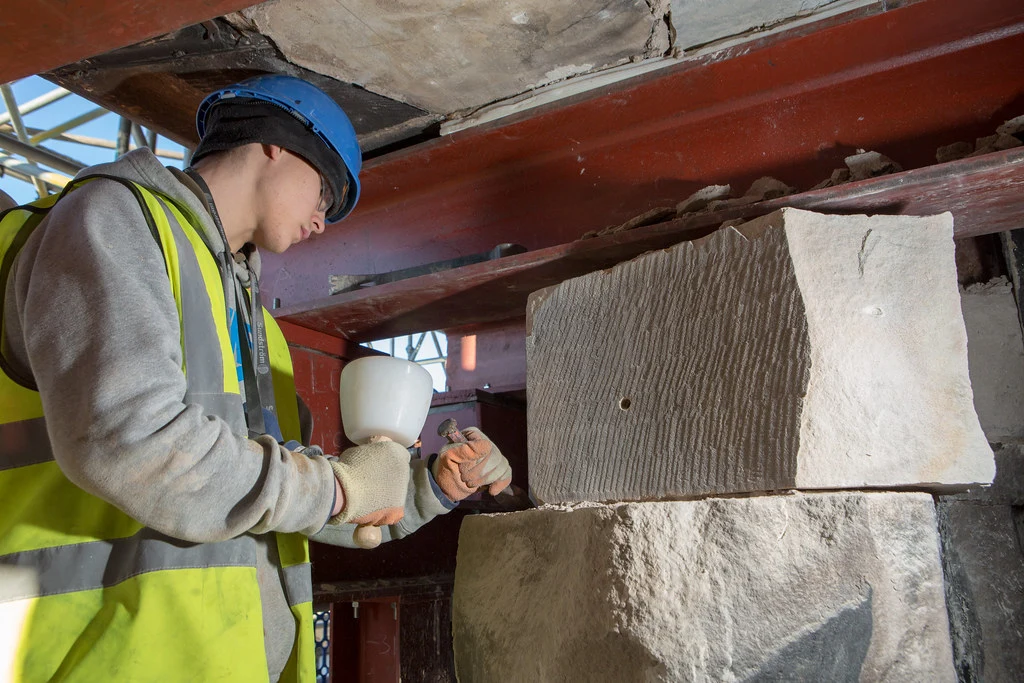
Structural stability in stone masonry comes from understanding how forces move through rock wall systems and placing stones to handle these loads effectively. Dry-stacked stone walls require a prepared, compacted granular base below grade (not necessarily a concrete footing), sized to soil and load conditions. The interlocking pattern of stones creates a self-supporting structure that becomes stronger under load.
Master stonemasons develop an intuitive understanding of stone behavior through years of experience. They can assess individual stones quickly and determine optimal placement for maximum stability.
1. Batter Angle Implementation
Provide a backward batter of ~5–10° (≈1:6 to 1:12) on dry-stone retaining walls to improve stability. This angle directs forces downward into the foundation rather than outward against the wall face.
2. Interlocking Stone Patterns
Stones should be placed in an interlocking pattern with the largest, flattest boulders at the base for maximum stability. Each stone should contact multiple neighbors to distribute loads across the wall system.
3. Course Leveling and Alignment
Each course of stones must be reasonably level to provide stable bearing for the next layer above. Shimming with smaller stones maintains level courses while filling voids for additional stability.
4. Corner and End Construction
Wall corners and ends require special attention to prevent separation under load or weather exposure. Alternating stone orientation at corners creates mechanical bonds that resist separation forces.
5. Height-to-Width Ratios
Wall stability depends on maintaining proper height-to-width ratios based on construction method and site conditions. Dry-stack walls typically require wider bases than mortared construction for equivalent heights.
Drainage systems play a crucial role in preventing water damage and structural failure in retaining walls.
Drainage Solutions for Long-Term Rock Wall Building Success

Effective drainage systems prevent water accumulation behind retaining walls that can cause hydrostatic pressure and structural failure over time. Natural stone walls in landscape construction benefit from backfilling each tier with gravel for drainage, creating multiple pathways for water to escape safely. Professional installations include perforated drain pipes at the base, filter fabric to prevent soil migration, and weep holes for surface drainage.
Water management becomes more critical as wall height increases and soil conditions change. Proper drainage extends wall life significantly and prevents costly repairs.
1. Base Drainage Systems
Perforated drain pipes at the foundation level collect groundwater and direct it away from the wall structure. These systems require proper slope and outlet connections to function effectively over time.
2. Backfill Drainage Materials
Graded gravel backfill allows water to drain freely while providing structural support behind the wall. The aggregate should be clean and properly sized to prevent clogging while maintaining stability.
3. Surface Water Management
Where a solid face is used, integrate weep holes and surface drains; for dry-stone walls, prioritise graded aggregate backfill, a perforated heel drain, and geotextile to manage water and prevent fines migration. These features should be integrated during construction rather than added later.
4. Filter Fabric Installation
Geotextile fabric prevents fine soil particles from migrating into drainage materials and clogging the system. Proper installation requires overlapping seams and secure attachment to prevent separation.
5. Maintenance Access Planning
Drainage systems require periodic inspection and maintenance to function properly throughout the wall’s service life. Design should include access points for cleaning and repair without major reconstruction.
Australia’s construction industry offers excellent opportunities for skilled stonemasons who understand both traditional and modern rock wall building techniques.
Masonry Career Opportunities
The demand for skilled stonemasons continues growing as Australia’s construction and landscaping industries expand, making it one of the most rewarding trade jobs in Australia across residential and commercial sectors. Traditional stonemasonry skills combined with modern engineering knowledge create valuable career opportunities for experienced tradespeople and those entering the field. Professional stonemasons work on diverse projects from heritage restoration to contemporary landscape construction.
We specialize in connecting qualified stonemasons with employers who value craftsmanship and technical expertise in rock wall building projects.
Current Stone Masonry Opportunities in Australia
Stonemason — NSW
This is exactly the trade the article describes — a skilled stonemason who can select, cut, and install natural stone across residential and commercial projects with the technical precision that quality rock wall building demands. This NSW role suits an experienced tradesperson with a solid grounding in both traditional stonemasonry methods and the modern drainage and foundation requirements that Australian building standards require.
Stonemason Installer — Kings Park, NSW
As the article outlines, the installation phase is where stonemasonry skill becomes most visible — precise stone placement, correct batter angle, interlocking courses, and proper drainage integration all come together on site. This Kings Park position suits a stonemason with strong installation experience who takes pride in the kind of craftsmanship that delivers structures built to last for decades.
Stonemason Fabricator — NSW
Behind every quality stone installation is a skilled fabricator who has selected, shaped, and prepared each piece to the tolerances that structural stonework demands — and this NSW role sits right at that critical stage of the process. It’s a strong opportunity for tradespeople who want to deepen their fabrication expertise across natural stone materials in a sector with consistent demand.
Stonemason Benchtop Installer — Fyshwick, ACT
While the article focuses on rock walls and retaining structures, the same precision stone placement and surface finishing skills translate directly to benchtop installation — where tight tolerances, material knowledge, and clean workmanship are equally non-negotiable. This Fyshwick role is well-suited to a stonemason looking to broaden their installation experience across both structural and interior stone applications in the ACT market.
Our daily job listings include a wide variety of stone industry jobs in Australia, offering opportunities across the construction sector from entry-level positions to senior project roles. We understand the visa requirements for international tradespeople and maintain partnerships with employers offering sponsorship pathways for qualified candidates.
Quality control and ongoing maintenance ensure rock wall building projects deliver lasting value to property owners.
Quality Control and Maintenance in Professional Rock Wall Building

Professional rock wall building requires systematic quality control throughout construction and planned maintenance programs to ensure long-term performance. Quality control begins with material selection, continues through each construction phase, and includes final inspection before project completion. Maintenance programs address drainage system cleaning, joint inspection, and stone replacement as needed over the wall’s service life.
Experienced stonemasons understand that quality control prevents problems rather than fixing them after they occur. This proactive approach reduces costs and maintains structural integrity over decades.
1. Material Inspection and Testing
All stones should be inspected for cracks, weathering, and structural soundness before installation in critical wall sections. Aggregate materials require gradation testing to ensure proper drainage performance and structural support.
2. Construction Phase Monitoring
Regular inspection during construction verifies proper stone placement, joint staggering, and drainage system installation. Documentation of construction details aids future maintenance and repair efforts.
3. Drainage System Performance
Drainage systems require testing during construction and periodic inspection to maintain effectiveness over time. Blocked drains can cause rapid wall failure if not addressed promptly.
4. Seasonal Inspection Programs
Annual inspections identify maintenance needs before they become structural problems requiring major repairs. Spring inspections after freeze-thaw cycles are particularly important in cold climates.
5. Documentation and Record Keeping
Maintenance records track performance trends and guide future inspection priorities for optimal wall preservation. Proper documentation supports warranty claims and insurance requirements.
For employers seeking qualified stonemasons who understand quality control and maintenance requirements, our recruitment team can identify candidates with proven track records in professional rock wall building projects.
Are you a stone industry professsional looking for vacancies?
Conclusion
Rock wall building successfully merges ancient stonemasonry wisdom with modern engineering solutions for lasting construction results. Professional stonemasons who master both traditional techniques and contemporary methods create structures that serve functional needs while maintaining aesthetic appeal. Quality craftsmanship in foundation preparation, drainage design, and structural stability ensures these walls withstand environmental challenges for generations.
Dayjob Recruitment connects skilled stonemasons and construction professionals with top-tier building projects across Australia. Our expert recruiters understand the specialized skills needed for quality rock wall construction. Learn more about finding your next stonework opportunity today.
Do you work in the stone industry and are open to new opportunities? We run a WhatsApp Channel where we share specifically Stone Industry job openings across Australia — including roles for CNC operators, fabricators, and installers.
FAQs
How Do They Build Rock Walls?
Rock walls are typically built by carefully selecting and stacking stones without the use of mortar, ensuring they interlock securely. The process involves creating a solid foundation, laying larger stones at the bottom for stability, and gradually using smaller stones as the wall rises. Expertise in this technique ensures durability and strength, much like the precision required in skilled trades such as carpentry and masonry, which our recruiters specialize in at Dayjob Recruitment.
What Was The Type Of Construction Method That Used Small Stones?
The construction method that utilized small stones is known as “dry stone walling.” This technique involves assembling stones without the use of mortar, relying on the weight and shape of the stones to hold the structure together. Similar craftsmanship is required in various trades, which our expert recruiters at Dayjob Recruitment are well-versed in, connecting skilled tradespeople with opportunities in construction and manufacturing.
What Were Rock Walls Used For?
Rock walls were historically used for various purposes, including property boundaries, erosion control, and agricultural terracing. They also served as structural support for buildings and as barriers against livestock. Understanding these applications highlights the importance of skilled trades in construction, a focus area of Dayjob Recruitment, where we connect talented individuals to roles that enhance infrastructure and community development.